
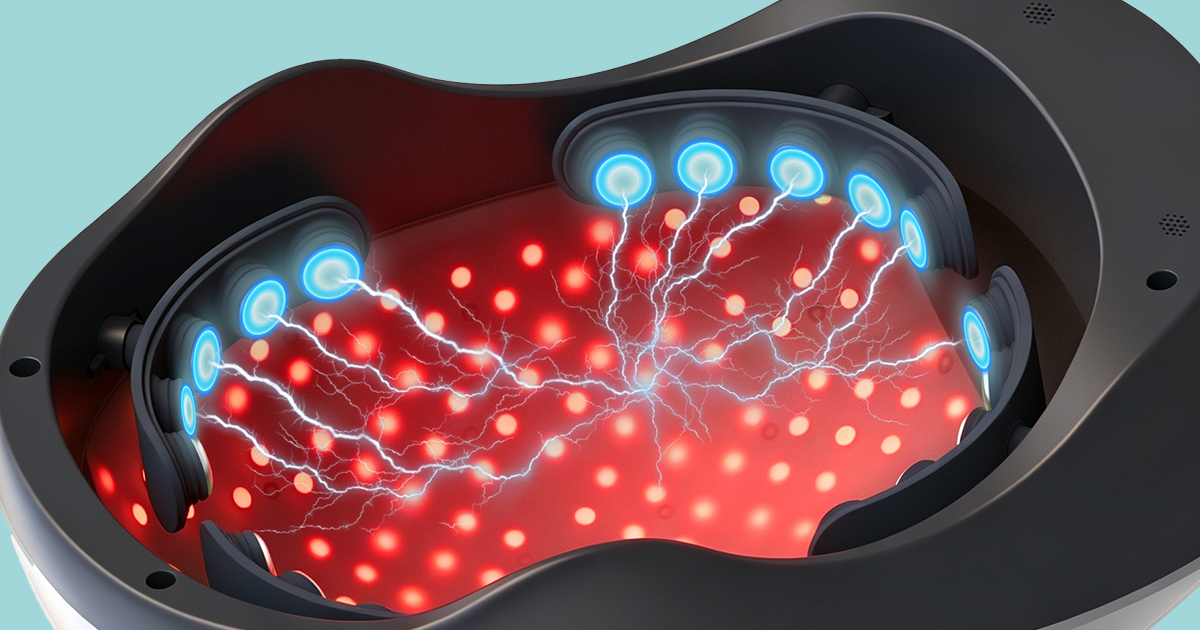
The value of a microcurrent scalp device isn't in the “massage” sensation—it's in low-level electrical stimulation that may influence hair follicle activity and autonomic nervous system regulation. Choose the right parameters and use it consistently; otherwise, it's just an expensive vibrating comb.
Most People Focus on the Wrong Thing
Scalp massage devices are everywhere, but many users stop at “it feels nice.” The problem: if you just want vibration, a manual massage or a basic air-cushion brush works fine.What makes microcurrent devices different is that they deliver electrical currents in the microampere range—close to the body's own bioelectrical signals. The key is that “micro” qualifier: too much current is a shock; too little is imperceptible.Two dimensions of effect are worth examining: physiological stimulation at the hair follicle level and neurological feedback through the autonomic nervous system.
What the Clinical Evidence Shows for Hair
A 2026 randomized, double-blind, sham-controlled trial published in Dermatology and Therapy provides the strongest evidence to date . The study enrolled 81 men aged 18–55 with androgenetic alopecia (Norwood-Hamilton stages II–VI), randomized 5:3 to either an active electrotrichogenic (ETG) device or a sham device. Participants used the device 30 minutes daily for 24 weeks.
Results at 6 months:
Total hair density increased by a mean difference of 24.40 hairs/cm² versus sham (95% CI 4.90–43.91; p=0.02)Terminal hair density increased by 17.06 hairs/cm² versus sham (95% CI 3.39–30.73; p=0.02)Cumulative hair thickness improved by 26.24 percentage points versus sham (95% CI 5.48–47.01; p=0.01)
No serious adverse events were reported. Tolerability symptoms were uncommon and mostly mild: itching (6.7% active vs 3.4% sham), redness (6.7% vs 0%), and scaling/increased dandruff (4.4% vs 6.9%)
A separate 6-month pilot study using the same device technology reported a 19.3% mean increase in total hair density and 8.8% increase in hair thickness among 21 male AGA patients, with 100% of participants showing hair regrowth at 6 months
The mechanism involves low-level electrical stimulation (LLES) delivered in the microampere range, which is believed to influence follicle activity and potentially extend the anagen (growth) phase
What this doesn't mean: Microcurrent is not a replacement for FDA-approved medications like minoxidil or finasteride. It's a non-drug adjunct. For users who can't or prefer not to use pharmaceuticals, it represents an evidence-supported alternative.
The Relaxation Effect Is Underrated
Beyond hair, the other value line of microcurrent devices is often overlooked: autonomic nervous system regulation.A randomized controlled trial published in IEEE Engineering in Medicine and Biology Society evaluated head-care devices using biosignal measurements . With 54 subjects, the study measured heart rate variability (HRV), heart rate, salivary amylase, and peripheral skin temperature before and after scalp care procedures.Findings: Five minutes of scalp care produced statistically significant changes in five indices—HF/TP, LF/HF, HR, sAA, and PST. Sympathetic nervous system activity decreased (LF/HF, HR, and sAA all dropped), while parasympathetic activity increased (HF/TP and PST rose). In plain terms: the body shifted from “stress mode” to “recovery mode” in just five minutes .This matters for the high-stress professional demographic. The demand for genuine stress-reduction tools is real, and scalp stimulation sits at the intersection of self-care and nervous system regulation.
How to Choose and Use
If you're considering a microcurrent scalp device, or already own one, a few practical points:Parameters matter. Not all “EMS” is the same. Quality devices deliver current in the safe and effective range—often described in the microampere range with pulsed frequencies around 1–100 Hz . A device that uses heat as its primary mechanism may not deliver the same bioelectrical stimulation.Dry vs. wet use changes sensation dramatically. Multiple user reports note that current perception is stronger on damp scalp. If your device's instructions specify dry use, follow them. If starting out, begin at the lowest intensity setting.Set realistic expectations. Scalp improvement is cumulative. In the clinical trials, meaningful effects emerged at the 3-month mark and became clearly significant by 6 months . This is not an overnight transformation.
Common Questions
Can a microcurrent device replace minoxidil?
No. Microcurrent is an adjunct. Minoxidil and finasteride remain first-line, clinically validated treatments. Combining them with microcurrent may be reasonable, but don't discontinue medication on your own.How long should I use it daily?
Clinical protocols used 30 minutes daily . In practice, 15–20 minutes is sufficient to cover the major scalp regions. More is not better.I don't feel much when using it. Is it working?
Current perception varies by individual, hair moisture, scalp oil, and electrode contact. The clinical effects observed in trials did not depend on user-reported sensation—so weak perception doesn't mean it's ineffective.