
650nm lasers and red light therapy are often lumped together, but laser diodes emit a coherent, focused beam while LEDs emit non-coherent, diffused light. In hair loss research, the clinical evidence suggests laser diode devices may outperform LED or hybrid devices. When choosing a device, the light source type matters more than the vague "red light" label.
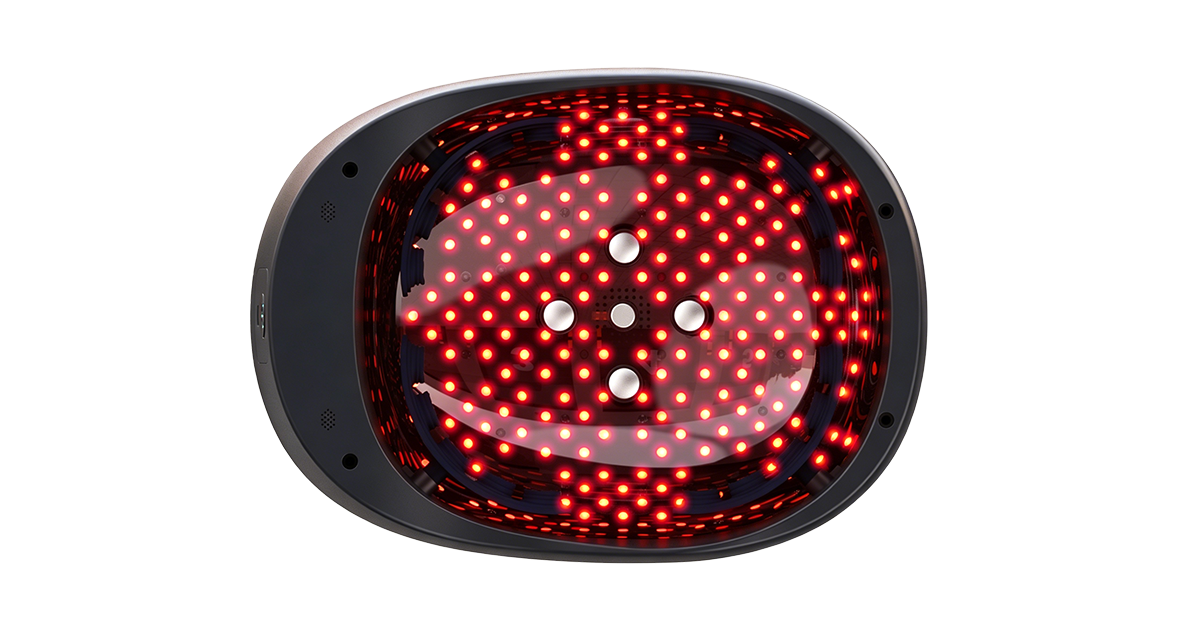
Two Concepts That Get Used Interchangeably
If you search for "red light hair growth cap" on a shopping site, you'll find product descriptions packed with terms like "laser," "LED," "red light," and "LLLT"—as if they all mean the same thing.Broadly speaking, they all fall under Photobiomodulation (PBM)—using specific wavelengths of visible or near-infrared light to influence cellular function and promote tissue repair. But at the clinical level, lasers and LEDs are two different light sources with distinct biological effects.
The Core Difference: Coherent vs. Non-Coherent
Laser (Laser Diode, LD) emits a highly collimated, narrow-band beam—light waves are in phase and directionally concentrated, creating high energy density.LED (Light-Emitting Diode) emits non-coherent, broadband light—it diffuses in multiple directions with relatively lower energy density.Put simply, a laser is like a focused flashlight beam; an LED is like a spread-out light bulb. Both can stimulate hair follicles, but the "quality" of energy reaching the follicle differs.
What the Clinical Evidence Shows
A 2021 systematic review pooled seven double-blind randomized controlled trials (607 participants) and concluded clearly: laser therapy significantly outperformed sham devices in improving hair density, with an overall standardized mean difference (SMD) of approximately 1.27.
More importantly, the data when grouped by light source type:Pure laser diode devices: SMD 1.52 (95% CI 1.16–1.88)LED + laser hybrid devices: SMD 0.85 (95% CI 0.55–1.16)The difference between the two groups was statistically significant (p=0.043).This means that in the current RCT evidence, pure laser devices may outperform hybrid devices. A 2025 network meta-analysis also supports the significant efficacy of LLLT combined with other interventions (such as PRP, minoxidil), specifically noting the central role of "red laser (RL)" in combination regimens.Note: These are not perfect head-to-head comparisons. Follow-up durations were generally short (≤26 weeks), and data for pure LED remains limited.
Why 650nm Keeps Showing Up
In hair loss clinical research, the 650–660nm band appears with the highest frequency. Multiple classic RCTs used devices within this range:Lanzafame et al. used 655nm (21 laser diodes + 30 LEDs) in male subjects, showing a 35–39% increase in hair count after 16 weeksThe same device in female subjects at 655nm showed a 37% increase in hair countThe 2013 Kim et al. trial used a helmet device combining 650nm lasers with 630nm and 660nm LEDs; after 24 weeks, the treatment group showed significant increases in both hair thickness (12.6±9.4 vs. 3.9±7.3 in control, P=0.01) and hair density (17.2±12.1 vs. –2.1±18.3 in control, P=.003)
The 650nm band is close to the effective absorption peak of cytochrome c oxidase in the red light absorption spectrum, triggering mitochondrial ATP production and ROS signaling pathways to support hair follicle cell activity.
What This Means for Buying Decisions
Many devices marketed as "red light hair growth" actually use LED arrays rather than laser diodes. The price difference often reflects light source type and regulatory pathway rather than pure brand premium.One practical observation: FDA-cleared hair growth devices (such as iRestore, Capillus, Theradome) predominantly use laser diodes as their core light source, with wavelengths concentrated in the 650–680nm range. This is no coincidence—FDA clearance requires clinical data submission, and the evidence base for laser devices is more robust.If you're shopping, pay attention to:Light source type: Is it laser diode, LED, or hybrid?Wavelength: Is it within the 650–660nm research range?Regulatory status: Is it FDA cleared for androgenetic alopecia?"Red light" is a broad marketing label. Laser and LED are the real technical differences.
Common Questions
Are LED devices completely ineffective?
No. Hybrid devices also showed effects superior to sham in studies (SMD 0.85), though the effect size was lower than pure laser devices. LED devices are typically cheaper and can serve as an entry-level option.Is 650nm laser the same as 650nm LED?
Same wavelength, different light source. The coherence and focus of lasers mean that at the same power, the energy density reaching target tissue may be higher. Whether this produces a substantial biological difference—current evidence leans toward "yes, but the gap isn't extreme."Should I choose pure laser or hybrid?
If budget allows and you want maximized evidence support, pure laser diode devices are the better-supported choice in current data. If budget is limited, hybrid devices can still serve as part of a PBM regimen—less effective, but not ineffective.